

The U.S. Supreme Court has ruled that lawsuits claiming Roundup’s maker failed to warn consumers about cancer risks cannot move forward, a decision that could sharply limit similar cases nationwide.In a 7-2 ruling, the court sided with Bayer, which acquired Monsanto in 2018. Monsanto was the original producer of Roundup, the widely used weedkiller whose key ingredient is glyphosate.The lawsuits argue glyphosate causes cancer and that the company failed to warn users. However, the Environmental Protection Agency has said glyphosate is not likely to cause cancer and did not require a cancer warning on Roundup’s label. The Supreme Court found that federal pesticide law blocks state-law failure-to-warn claims that would require a different label.Glyphosate was one of the top three pesticides used in Iowa from 2010 to 2019, according to a report from the Harkin Institute and the Iowa Environmental Council.Some farmers tell KCCI the ruling is a setback.“Giving protection to the biggest manufacturer of pesticides in the world isn’t getting us on the path to safer, more effective herbicides,” said Aaron Lehman, a farmer and president of the Iowa Farmers Union.Lehman said the decision makes it harder for farmers to seek relief in court.“If they’re using something that causes cancer, farmers should be able to go to the courts and defend themselves and this ruling doesn’t help that at all,” Lehman said. Glyphosate has long been at the center of debate over whether it is a cancer risk. Thousands of lawsuits have been filed against Bayer over Roundup, alleging cancer and inadequate warnings. Bayer stopped using glyphosate in Roundup sold for the U.S. residential lawn and garden market.Lehman said the outcome is concerning for farmers in Iowa, where cancer rates and the risks of farm work remain a concern.“Because of those things, we ought to be doing everything we can to provide more protections for farmers. This provides less protections for farmers,” Lehman said. Bayer shared a statement with KCCI from its CEO: “This decision is good for American farmers who help feed the world. It provides the regulatory clarity necessary for innovators like us to develop the agricultural tools that guarantee an affordable food supply,” said Bayer CEO Bill Anderson. “This litigation has enormous costs for the company and has impacted public trust. The decision brings overdue justice on an issue that should have been clarified much earlier. It’s time to put it behind us. Strengthened by this ruling, we continue to pursue our multi-pronged containment strategy, which includes the previously announced class settlement.”Jennifer Zwagerman, director of Drake University’s Agricultural Law Center, tells KCCI the ruling is likely to halt many similar cases.“There are a lot of pending claims. Those are unlikely to move forward based on to the extent that they are extremely similar,” Zwagerman said. “There are state law tort claims that are still able to move forward, just not ones that deal with health and safety, which is where we’ve seen the majority of them.”Bayer also said it expects current warning-based claims to be dismissed and future state failure-to-warn claims to be blocked. Those claims make up most of the Roundup litigation.
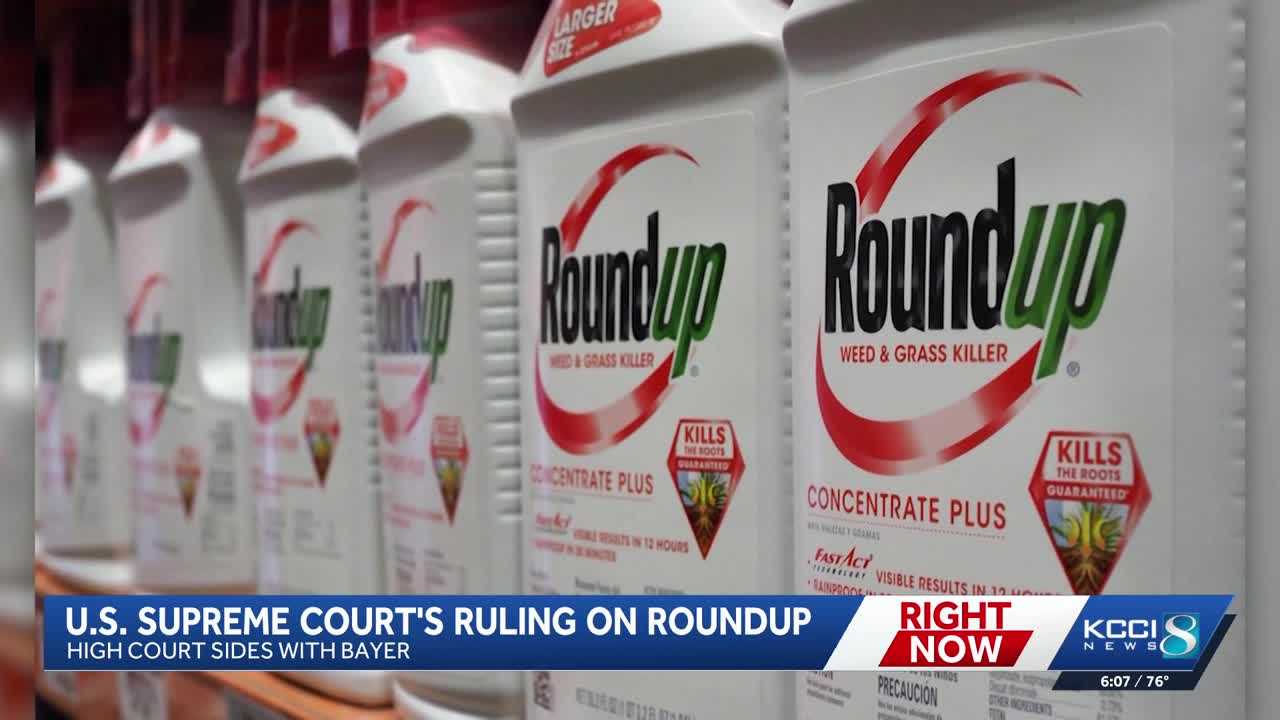
The U.S. Supreme Court has ruled that lawsuits claiming Roundup’s maker failed to warn consumers about cancer risks cannot move forward, a decision that could sharply limit similar cases nationwide.
In a 7-2 ruling, the court sided with Bayer, which acquired Monsanto in 2018. Monsanto was the original producer of Roundup, the widely used weedkiller whose key ingredient is glyphosate.
The lawsuits argue glyphosate causes cancer and that the company failed to warn users. However, the Environmental Protection Agency has said glyphosate is not likely to cause cancer and did not require a cancer warning on Roundup’s label. The Supreme Court found that federal pesticide law blocks state-law failure-to-warn claims that would require a different label.
Glyphosate was one of the top three pesticides used in Iowa from 2010 to 2019, according to a report from the Harkin Institute and the Iowa Environmental Council.
Some farmers tell KCCI the ruling is a setback.
“Giving protection to the biggest manufacturer of pesticides in the world isn’t getting us on the path to safer, more effective herbicides,” said Aaron Lehman, a farmer and president of the Iowa Farmers Union.
Lehman said the decision makes it harder for farmers to seek relief in court.
“If they’re using something that causes cancer, farmers should be able to go to the courts and defend themselves and this ruling doesn’t help that at all,” Lehman said.
Glyphosate has long been at the center of debate over whether it is a cancer risk. Thousands of lawsuits have been filed against Bayer over Roundup, alleging cancer and inadequate warnings.
Bayer stopped using glyphosate in Roundup sold for the U.S. residential lawn and garden market.
Lehman said the outcome is concerning for farmers in Iowa, where cancer rates and the risks of farm work remain a concern.
“Because of those things, we ought to be doing everything we can to provide more protections for farmers. This provides less protections for farmers,” Lehman said.
Bayer shared a statement with KCCI from its CEO:
“This decision is good for American farmers who help feed the world. It provides the regulatory clarity necessary for innovators like us to develop the agricultural tools that guarantee an affordable food supply,” said Bayer CEO Bill Anderson. “This litigation has enormous costs for the company and has impacted public trust. The decision brings overdue justice on an issue that should have been clarified much earlier. It’s time to put it behind us. Strengthened by this ruling, we continue to pursue our multi-pronged containment strategy, which includes the previously announced class settlement.”
Jennifer Zwagerman, director of Drake University’s Agricultural Law Center, tells KCCI the ruling is likely to halt many similar cases.
“There are a lot of pending claims. Those are unlikely to move forward based on to the extent that they are extremely similar,” Zwagerman said. “There are state law tort claims that are still able to move forward, just not ones that deal with health and safety, which is where we’ve seen the majority of them.”
Bayer also said it expects current warning-based claims to be dismissed and future state failure-to-warn claims to be blocked. Those claims make up most of the Roundup litigation.