

Des Moines residents are raising concerns about the future of the city’s public library system as city leaders prepare to begin budget planning earlier than usual in response to changes in state property tax law.Des Moines city officials say cuts will have to come from departments because of state law affecting property tax revenue. Changes for the same reason is why other leaders of cities and communities across the state are also preparing to have to look at their budgets for fiscal year 2028. In early May, Iowa state legislators passed a property tax bill, which is still awaiting Gov. Kim Reynolds’ signature. Part of what the bill does is limit local government revenue growth with a 2% cap. Money from property taxes impacts anything from public safety, infrastructure, education and more.Des Moines city manager Scott Sanders says the city is starting the budget cycle process about four months earlier than it typically does because of the recently passed legislation and the need to prepare for its impact. The city will have a work session meeting on Mon., May 18, at 7:30 a.m. No official vote on the budget will be taken. Some people who live or work in Des Moines worry libraries could be affected.“They’re a space for everyone and it’s a safe space,” said Hubbell, who lives in Waukee, but works in Des Moines. “They actually do a lot of things like tools, rentals, and community services that most people don’t really think about.”Hubbell said she does not want to see changes made to libraries in Des Moines or in any community across Iowa.“I love my libraries and I don’t want them to be cut to be perfectly honest,” said Hubbell. The concern comes as the property tax legislation could have an impact on how cities plan future budgets.“It’s important to recognize we’re in the preparation stages still,” said Sanders.Sanders said the city is planning ahead for two budget cycles because the legislation includes a 2% cap on property tax revenue growth beginning in fiscal year 2028.“We wanted to forewarn the public, our residents, that we knew it was going to be pretty significant impacts to the city and we’re still trying to determine exactly what those impacts will be,” said Sanders. Other metro communities are also reviewing the potential effects of the legislation for fiscal year 2028. Clive, Urbandale, West Des Moines and Waukee told KCCI Investigates they are evaluating how it could affect budgets and services. Grimes is also evaluating the impact. Its city council is set to consider the second reading of a franchise fee meant to address earlier property tax legislation on Tuesday night.Sanders says when it comes to Des Moines, no decisions have been made about cuts to any specific department.“I actually won’t speak to specific departments because this is again significant enough that all departments will need to be involved and participate in savings,” said Sanders.He said Des Moines has faced major budget cuts before, but with the budget cycles they’re preparing for with the bill in mind—it may be different. “The difference with this cycle is we’ve used up a lot of our solutions that may have been available in prior budget cuts,” said Sanders. “We’re down to very, very few options right up at the start of the process.”One of those past solutions was a local option sales tax voters approved of in March of 2019. KCCI previously reported, the local option sales tax went toward “street rehabilitation, stormwater upgrades, enhanced public safety, neighborhood improvement and the expansion of library hours”.“That is going to be hard to do with some of the changes and we’ve utilized nearly as much as the sales taxes we can use for operations,” said Sanders. “Ideally, the sales tax was for one-time expenses for facilities, equipment purchases, additional street improvements, things of that nature.”Sanders says Monday’s work session was only the first step as the city begins trying to understand the scope of the problem. He said residents will have opportunities this summer to provide public input.Hubbell wishes all communities across Iowa could figure out ways to avoid cutting any library services. “I don’t know where else they should cut, but I do think libraries should stay,” said Hubbell. KCCI did reach out to the Des Moines Public Library. The director, Melissa McCollum, shared the following statement: “Now that the legislative session has ended, City Manager Scott Sanders will update the City Council and community about impacts on the City of Des Moines’ budget as well as the timeline and process for developing the Fiscal Year 2028 budget at a City Council Work Session on Monday, May 18 at 7:30 AM.At the same meeting, the Des Moines Public Library will highlight the many vital ways community libraries uplift individuals and strengthen neighborhoods throughout Des Moines. Now is the time for community members to pay attention and share what they value most about living and working in this community.”
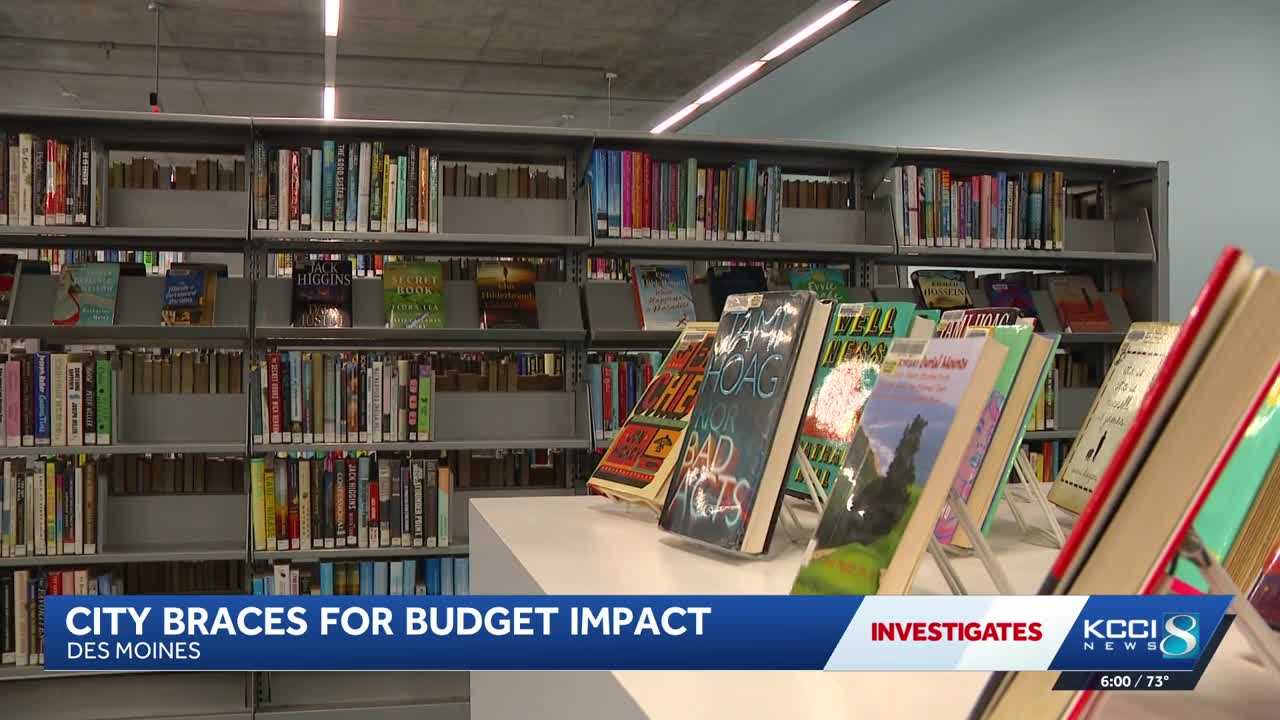
Des Moines residents are raising concerns about the future of the city’s public library system as city leaders prepare to begin budget planning earlier than usual in response to changes in state property tax law.
Des Moines city officials say cuts will have to come from departments because of state law affecting property tax revenue. Changes for the same reason is why other leaders of cities and communities across the state are also preparing to have to look at their budgets for fiscal year 2028.
In early May, Iowa state legislators passed a property tax bill, which is still awaiting Gov. Kim Reynolds’ signature. Part of what the bill does is limit local government revenue growth with a 2% cap. Money from property taxes impacts anything from public safety, infrastructure, education and more.
Des Moines city manager Scott Sanders says the city is starting the budget cycle process about four months earlier than it typically does because of the recently passed legislation and the need to prepare for its impact. The city will have a work session meeting on Mon., May 18, at 7:30 a.m. No official vote on the budget will be taken.
Some people who live or work in Des Moines worry libraries could be affected.
“They’re a space for everyone and it’s a safe space,” said Hubbell, who lives in Waukee, but works in Des Moines. “They actually do a lot of things like tools, rentals, and community services that most people don’t really think about.”
Hubbell said she does not want to see changes made to libraries in Des Moines or in any community across Iowa.
“I love my libraries and I don’t want them to be cut to be perfectly honest,” said Hubbell.
The concern comes as the property tax legislation could have an impact on how cities plan future budgets.
“It’s important to recognize we’re in the preparation stages still,” said Sanders.
Sanders said the city is planning ahead for two budget cycles because the legislation includes a 2% cap on property tax revenue growth beginning in fiscal year 2028.
“We wanted to forewarn the public, our residents, that we knew it was going to be pretty significant impacts to the city and we’re still trying to determine exactly what those impacts will be,” said Sanders.
Other metro communities are also reviewing the potential effects of the legislation for fiscal year 2028.
Clive, Urbandale, West Des Moines and Waukee told KCCI Investigates they are evaluating how it could affect budgets and services. Grimes is also evaluating the impact. Its city council is set to consider the second reading of a franchise fee meant to address earlier property tax legislation on Tuesday night.
Sanders says when it comes to Des Moines, no decisions have been made about cuts to any specific department.
“I actually won’t speak to specific departments because this is again significant enough that all departments will need to be involved and participate in savings,” said Sanders.
He said Des Moines has faced major budget cuts before, but with the budget cycles they’re preparing for with the bill in mind—it may be different.
“The difference with this cycle is we’ve used up a lot of our solutions that may have been available in prior budget cuts,” said Sanders. “We’re down to very, very few options right up at the start of the process.”
One of those past solutions was a local option sales tax voters approved of in March of 2019. KCCI previously reported, the local option sales tax went toward “street rehabilitation, stormwater upgrades, enhanced public safety, neighborhood improvement and the expansion of library hours”.
“That is going to be hard to do with some of the changes and we’ve utilized nearly as much as the sales taxes we can use for operations,” said Sanders. “Ideally, the sales tax was for one-time expenses for facilities, equipment purchases, additional street improvements, things of that nature.”
Sanders says Monday’s work session was only the first step as the city begins trying to understand the scope of the problem. He said residents will have opportunities this summer to provide public input.
Hubbell wishes all communities across Iowa could figure out ways to avoid cutting any library services.
“I don’t know where else they should cut, but I do think libraries should stay,” said Hubbell.
KCCI did reach out to the Des Moines Public Library. The director, Melissa McCollum, shared the following statement:
“Now that the legislative session has ended, City Manager Scott Sanders will update the City Council and community about impacts on the City of Des Moines’ budget as well as the timeline and process for developing the Fiscal Year 2028 budget at a City Council Work Session on Monday, May 18 at 7:30 AM.
At the same meeting, the Des Moines Public Library will highlight the many vital ways community libraries uplift individuals and strengthen neighborhoods throughout Des Moines. Now is the time for community members to pay attention and share what they value most about living and working in this community.”